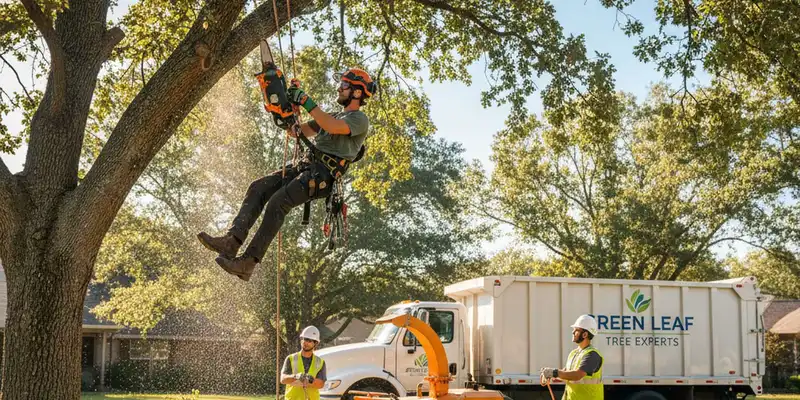
Wilmette, IL is a North Shore community defined by mature street trees, established homes, and a wide mix of property layouts. Large oaks, elms, and ash trees canopy many streets, while narrow side yards and shared boundaries can make equipment access difficult. Tree care professionals in Highland Park know how to evaluate risk, remove trees safely near utilities, and respond to seasonal disease pressure on properties that need dependable North Shore tree care.
That is one reason so many Wilmette property owners turn to Arbor Tree Care for year-round maintenance.

Prefer to Talk to An Expert?
(224) 765-4442
Why Wilmette Property Owners Trust Local Professionals to Get It Right
Because they work in the area every day, local crews understand the aging canopy, drainage concerns, and close residential setbacks that shape tree work in Wilmette. Each job is planned with the right equipment and methods for root conflicts, nearby utility lines, and storm debris that can build up after severe weather.
From professional tree pruning solutions along Sheridan Road near the lakefront to hazardous limb removal near Central Avenue and the Metra corridor, every project is completed with careful attention to safety and long-term tree health.
If you care about your property, work with a local team that can keep your canopy managed, your yard open, and your landscape safe in Wilmette.
Our Tree-Service Services
in Highland Park, IL, Include
A Service Area Designed to Fit Your Wilmette Neighborhood
Wilmette’s mature trees and tight access points call for tree care that adapts to the property, not a standard approach forced onto every job. Local professionals adjust their methods based on the site, whether the work is for a home, multi-unit building, or commercial lot.
It makes no difference if the property is a larger estate in East Wilmette, a bungalow in Indian Hill, or a multi-family building near the Wilmette Harbor.
From reliable stump removal services and tree trimming to emergency response and disease treatment, every service is matched to the neighborhood’s layout and the needs of the property.
Wilmette’s Dense Urban Canopy, Rooted in History
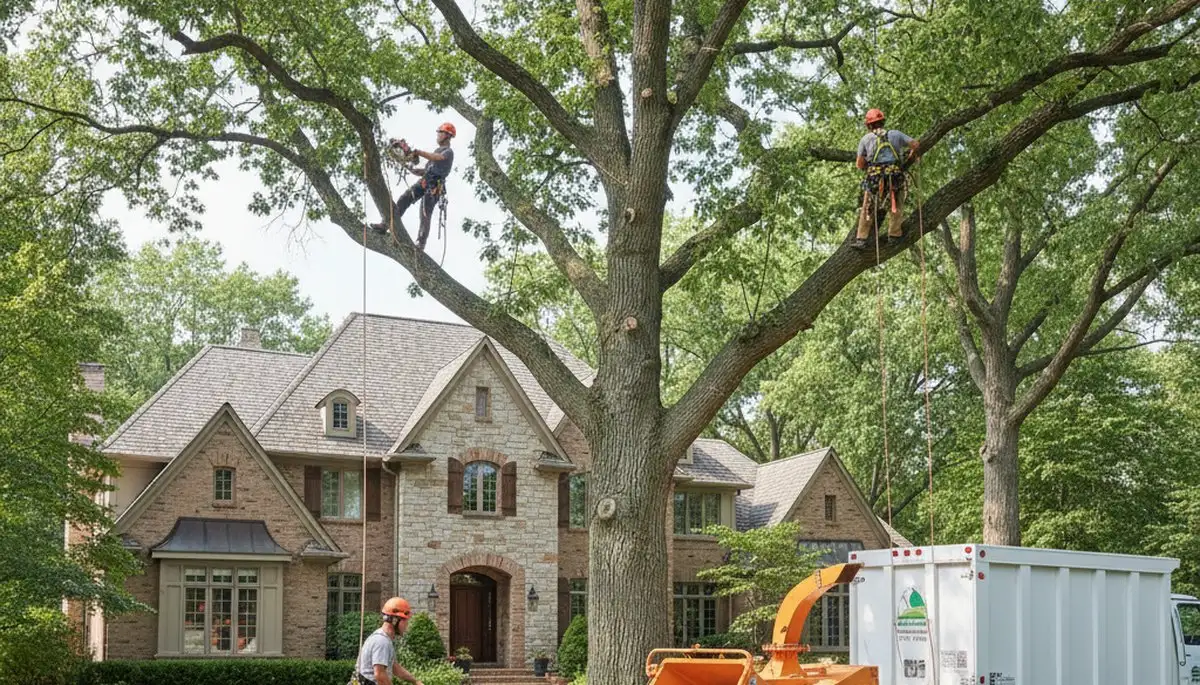
Wilmette grew steadily through the late 1800s and early 1900s, and plantings from that era still shape the streets today. Elms, oaks, and maples remain common across the village, but the same history also brings root encroachment, aging limbs, and declining ash trees that affect how tree work must be handled now.
Root Intrusion and Infrastructure Conflict
Older blocks in Wilmette, especially east of Green Bay Road and along Lake Avenue, often have mature trees whose roots extend under sidewalks, driveways, and utility corridors. The result can be lifted pavement, poor drainage, and added safety risks for both pedestrians and property owners.
Local professionals address these issues with focused root pruning, barrier installation, and selective canopy reduction to limit future damage while preserving tree health whenever possible.
Aging Ash and Elm Canopy Decline
The village’s older ash and elm trees still provide shade and curb appeal, but many now show serious structural weakness. Emerald ash borer and Dutch elm disease can cause sudden branch failure or complete tree decline, creating hazards near homes and along neighborhood streets.
Crews manage these conditions through disease evaluation, staged removal planning, and replanting strategies that account for existing canopy gaps and surrounding tree health. Nearby communities dealing with similar concerns, including tree removal contractors in Kenilworth, IL, have relied on comparable approaches to handle declining trees along historic residential streets.
Storm Damage and Wind-Loaded Limb Failure
Years of exposure to Lake Michigan winds and recurring ice events have left many Wilmette trees with stressed upper limbs and weakened structure in the crown.
Trusted professionals reduce these risks with crown reduction, hazard limb removal, and post-storm cleanup that helps protect property and limit liability from falling branches.
Seasonal Fungal Disease and Moisture Stress
Because Wilmette sits close to the lake and experiences humid summers, leaves stay wet longer and soils often hold extra moisture. Those conditions can encourage fungal problems such as anthracnose, powdery mildew, and Cytospora canker on vulnerable trees.
Experienced crews manage those concerns with pruning that improves airflow, fungicide applications when appropriate, and drainage corrections that support healthier growth through damp, humid weather. Property owners in Glencoe, IL face similar North Shore fungal pressure and benefit from the same preventive approach.
Tight Access and Equipment Constraints
Narrow side yards, fenced back gardens, and densely planted lots are common in Wilmette, which makes safe staging and debris removal more complicated without a plan.
Local pros rely on compact aerial lifts and hand-climbing methods when needed, with a focus on protecting landscaping, coordinating with neighbors, and completing work with minimal disruption to nearby structures.

Kick off your tree service project today!
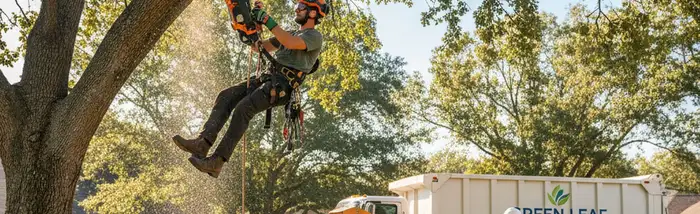
Tree Services in Wilmette, IL: Care for Every Season
From scheduled maintenance to urgent storm cleanup, local professionals help keep Wilmette properties safe, healthy, and structurally sound:
Routine Tree Trimming and Pruning in Wilmette, IL
- Canopy clearance along Sheridan Road corridors: Branches that extend over sidewalks and roadways are trimmed to protect pedestrian clearance and reduce wind stress during storm season.
- Structural pruning for young replacement trees: Newly planted oaks and maples in East Wilmette are pruned early to build strong branch structure before defects become established.
- Crown thinning for mature shade trees: Thick canopies on larger lots near Indian Hill are thinned to improve airflow, lower disease pressure, and help reduce storm damage.
- Utility line clearance near the Metra corridor: Trees growing toward overhead lines near the Union Pacific North right-of-way are directionally pruned to maintain safe spacing without unnecessary removal.
- Seasonal maintenance pruning for ornamental trees: Flowering crabapples, serviceberries, and ornamental pears throughout Wilmette are trimmed each year to support shape, health, and seasonal bloom.
Plan routine trimming before late-season storms arrive so your Wilmette trees stay healthier and less likely to create hazards.
Tree Removal Services in Wilmette, IL
- Hazardous tree removal near structures: Dead or unstable trees leaning toward homes, garages, or fences are dismantled safely using sectional cutting and controlled lowering.
- Storm-damaged tree removal: After ice storms or strong winds from Lake Michigan, split trunks and uprooted trees are cleared quickly to restore access.
- Ash tree removal for emerald ash borer-affected specimens: Infested ash trees in older neighborhoods are removed before structural failure becomes more likely, helping protect nearby property and infrastructure.
- Dead tree removal in rear yard spaces: Trees lost to compaction, root injury, or disease are taken down from tight rear yards with equipment suited for limited access.
- Multi-stem and overgrown tree removal near property lines: Boundary trees that outgrow their space or press into neighboring structures are removed with attention to shared-property coordination.
Removing declining trees on time helps reduce the chance of sudden branch failure and lowers long-term liability for Wilmette homeowners.
Stump Grinding and Cleanup in Wilmette, IL
- Stump grinding after ash removal: After emerald ash borer removals, stumps are ground below grade to remove tripping hazards and make way for replanting or lawn repair.
- Surface root grinding near driveways and walkways: Exposed roots near concrete and paver surfaces are addressed during grinding to help limit future pavement damage.
- Rear yard stump removal in tight spaces: Compact grinding equipment can reach fenced yards and narrow side lots where larger machines cannot operate safely.
- Multi-stump clearing for landscape renovation projects: Properties being replanted or updated with new hardscape can have several stumps removed in a single visit to keep the project moving.
- Post-grinding debris cleanup and soil backfill: Once grinding is done, debris is removed and low areas are filled with topsoil so the space is ready for seed or sod.
Stump removal in Wilmette opens space for new plantings, landscape upgrades, and safer everyday yard use across compact lots and larger lakefront properties alike.
Emergency Tree Services in Wilmette, IL
- 24/7 storm response for fallen trees: When wind or ice from Lake Michigan brings trees down, emergency crews respond to blockages, damaged structures, and access problems.
- Immediate hazard limb removal after wind events: Hanging or partially attached limbs are removed first so immediate safety risks are addressed before a full assessment.
- Emergency root failure and uprooted tree clearing: Saturated soil after heavy spring rain can trigger root failure in older trees, and emergency removal helps restore access and reduce further damage.
- Post-storm structural assessment and triage: After major weather events, crews inspect damaged trees to decide which ones need immediate removal and which may be stabilized through corrective pruning.
- Rapid debris removal and site clearance: Broken limbs, fallen trunks, and scattered wood are gathered and hauled away so outdoor spaces can be used again safely.
Emergency tree response in Wilmette is planned around the area’s access challenges, allowing crews to reach properties efficiently even when blocked streets or storm debris complicate entry.