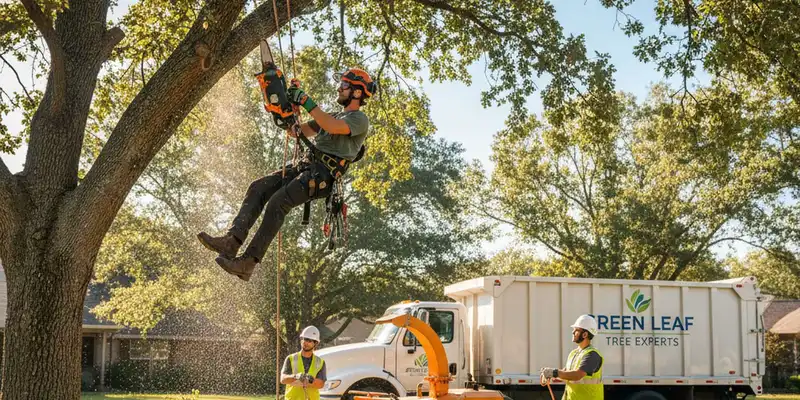
Fort Sheridan rests along Lake Michigan’s western edge in a former military community now known for its residential character, brick architecture, wooded ravines, and long-established trees. Many properties here have limited access, deep-rooted oaks and elms, and soil influenced by lake moisture and compacted ground. The network of tree care professionals in Highland Park knows how to work around narrow entry points, manage aging and weakened trees, and protect root systems on lakefront and ravine-adjacent properties.
That is one reason so many Fort Sheridan, IL property owners turn to Arbor Tree Care for year-round maintenance.

Prefer to Talk to An Expert?
(224) 765-4442
Why Fort Sheridan Property Owners Rely on Local Tree Experts
Because they know the neighborhood, these professionals understand the dense canopy, variable lakeshore soil, and tight access conditions that shape every job. Services are planned with the right equipment and methods for Fort Sheridan properties, with attention to moisture-related disease pressure, aging roots, and the wind exposure common in this part of Highland Park.
From expert tree pruning solutions along Leonard Wood Avenue near the historic parade grounds to reliable stump removal services on wooded lots bordering Sheridan Road, each project is completed carefully and with long-term site health in mind.
If you care about protecting your landscape, local contractors can help keep your Fort Sheridan property neat, safe, and structurally sound.
Our Tree-Service Services
in Highland Park, IL, Include
Tree Care Built for the Fort Sheridan Neighborhood
Historic lot patterns and restricted access make this area a poor fit for generic tree service. That is why local professionals take a site-specific approach to every wooded residence and former military-era property.
Whether you own a brick officer’s quarters home in the historic core near Scott Loop, a newer townhome in Ravine Woods, or a lakefront property near the bluff above Lake Michigan, the work is adjusted to the site.
From tree trimming and tree disease treatments to emergency tree services and root protection, every service is tailored to the neighborhood’s setting and each property’s needs.
Fort Sheridan’s Historic Urban Forest
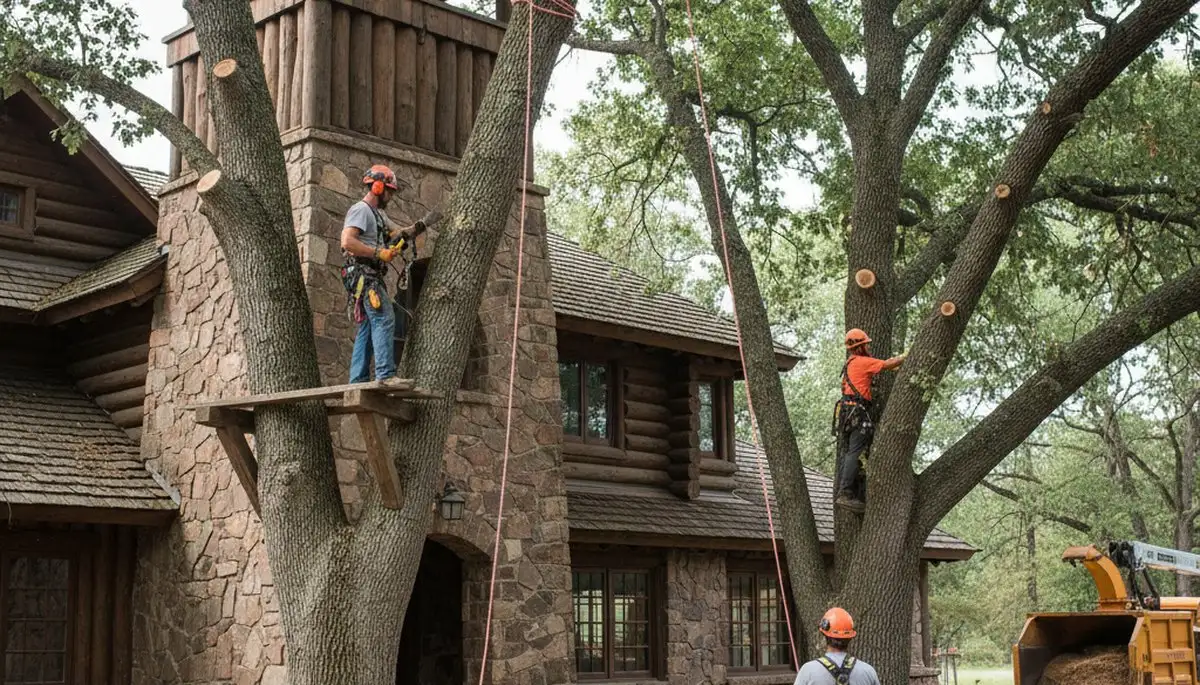
Fort Sheridan began as a U.S. Army post in the 1880s and was decommissioned in the early 1990s before becoming a residential community with strict preservation standards. That history still shows up in today’s tree care needs through old root systems, mature specimen trees, and compacted grading left from the military era.
Aging Canopy and Structural Tree Decline
Many Fort Sheridan properties, especially in the historic officer’s quarters area near Leonard Wood Avenue and Scott Loop, have oaks, elms, and lindens that have outgrown their original planting spaces. Without regular care, these trees can develop heavy deadwood and co-dominant stems that threaten roofs, walkways, and nearby historic buildings.
Local professionals address decline with selective crown reduction, deadwood removal, and cabling when needed to reduce risk and preserve the look of established trees.
Lakeshore Moisture and Fungal Disease Pressure
Being close to Lake Michigan creates a distinctive microclimate, but it also raises humidity levels that can speed up fungal problems. Oak wilt, anthracnose, and hypoxylon canker may spread quickly through a thick canopy, causing crown dieback and weaker branch attachment.
Professionals respond with targeted tree disease treatments, preventive fungicide applications, and selective pruning that improves airflow while respecting preservation guidelines.
Root Stress from Compacted Military-Era Soil
Years of heavy vehicle use and compacted fill from the original installation have left many trees with limited room to develop healthy roots in the upper soil layer.
Trusted crews support these sites with root protection zone management, vertical mulching, and soil aeration to improve root health and strengthen long-term stability.
Wind Exposure and Storm Damage from Lake Michigan
Fort Sheridan’s open lakeshore position brings frequent northwest and northeast wind events, especially in late fall and early spring. Those conditions can lead to broken limbs and uprooting in exposed parts of the canopy.
Experienced crews prepare properties with structural pruning, hazard assessments, and lightning protection installation to help trees handle strong wind and severe weather.
Narrow Access Routes and Historic Preservation Limits
Tight residential lanes, preserved brick paving, and strict historic district rules make equipment access and debris removal more complicated here than on a typical suburban lot.
Local professionals use compact aerial equipment and low-impact rigging, with an emphasis on surface protection and preservation compliance so the work fits the property and the district.
For help keeping your Fort Sheridan property in good shape all year, call (224) 765-4442 to request a free quote from a local professional.
Every property deserves safe access. Let Arbor Tree Care help you maintain it!

Kick off your tree service project today!
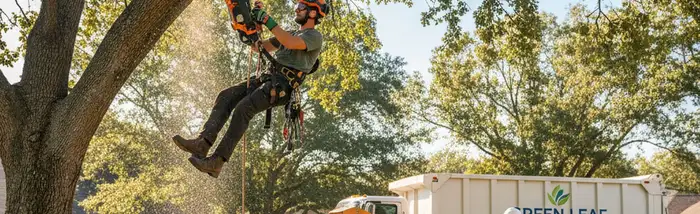
Tree Services in Fort Sheridan, IL: Seasonal Care for Every Property
From routine pruning to emergency cleanup after storms, local pros keep Fort Sheridan properties safe, healthy, and well maintained through every season.
Routine Tree Trimming and Pruning in Fort Sheridan, IL
- Crown cleaning on historic oaks near Leonard Wood Avenue — Removing deadwood and crossing limbs from mature oaks along the historic parade ground corridor to lower the risk of failure while keeping the canopy intact.
- Structural pruning for linden and elm trees in Ravine Woods — Correcting weak unions and co-dominant stems on mid-canopy trees before seasonal winds increase the chance of breakage.
- Canopy thinning on lakefront bluff properties — Selective tree trimming that reduces wind load on exposed trees near the Lake Michigan bluff, helping protect the tree and the property below.
- Shrub and understory management near Scott Loop residences — Shrub removal and line clearing that improve visibility and reduce moisture buildup around historic brick foundations.
- Seasonal pruning coordination with nearby Highland Park communities — Scheduling work in step with similar projects seen in tree pruning professionals in Lake Forest, IL to support consistent canopy care across the North Shore.
Plan routine trimming before spring growth begins to reduce disease entry points and preserve the historic look of your Fort Sheridan property.
Tree Removal Services in Fort Sheridan, IL
- Hazardous tree removal near preserved historic structures — Carefully removing unstable trees beside brick officer’s quarters and registered historic buildings without harming foundations or preserved paving.
- Storm-damaged tree removal after lake-driven wind events — Clearing split, fallen, or partially failed trees after severe weather with low-impact rigging that protects the surrounding landscape.
- Dead tree removal in the ravine corridor — Taking out standing dead elms and ash trees affected by emerald ash borer before they become a hazard in wooded ravine areas.
- Tree removal for construction and renovation clearance — Coordinating removals with restoration schedules to satisfy preservation board requirements while opening needed access areas.
- Diseased tree extraction to reduce spread through the canopy — Removing oak wilt- and hypoxylon-affected trees before the disease reaches nearby healthy specimens in the dense residential canopy.
Prompt removal of compromised trees helps protect both the historic buildings and the mature canopy that gives Fort Sheridan its character.
Stump Grinding and Cleanup in Fort Sheridan, IL
- Stump grinding on narrow historic lanes — Using compact grinding equipment designed for the restricted access found on brick-paved residential streets in the historic core.
- Full stump and root flare removal on ravine-adjacent lots — Clearing stumps near the ravine edge where uneven decay can destabilize the slope.
- Post-removal cleanup and soil backfill — Filling and grading stump cavities to restore lawn areas and reduce trip hazards on maintained residential properties.
- Multi-stump clearance for landscape renovation projects — Sequencing stump removal across properties undergoing updates, similar to stump grinding in Highwood, IL where dense residential conditions create similar access needs.
- Root cleanup after tree removal — Addressing surface roots that extend beyond the stump, especially on older oak and elm trees with wide lateral spread.
Thorough stump removal reduces decay and pest habitat, reclaims usable lawn space, and prepares the site for tree planting with species suited to Fort Sheridan’s lakeshore microclimate and historic landscape setting.
Emergency Tree Services in Fort Sheridan, IL
- 24-hour storm response for fallen trees blocking residential access — Fast cleanup to remove trees and large limbs from driveways, walkways, and streets after strong lake winds or ice storms.
- Emergency limb removal from historic rooftops and structures — Careful removal of storm-damaged branches resting on or against preserved brick buildings to limit secondary damage.
- Post-storm storm damage assessment across the historic district — Detailed canopy inspections after major weather events to find damaged trees that need immediate attention.
- Emergency insect management response for rapid pest outbreak containment — Targeted treatment when emerald ash borer or another serious pest begins spreading through the Fort Sheridan canopy.
- Urgent hazard tree stabilization near pedestrian areas — Temporary cabling and bracing for trees showing sudden structural problems near shared walkways, the lakefront path, or the historic parade ground.
When storms or sudden tree failure put your property at risk, local crews who understand Fort Sheridan’s access limits and preservation rules respond with the right equipment and practical judgment.