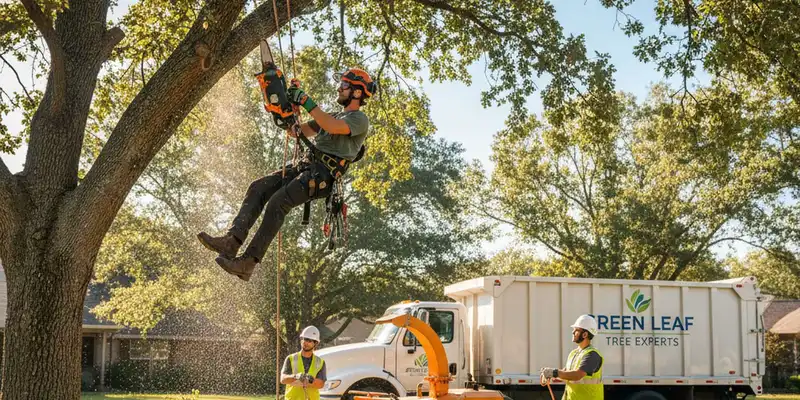
Glencoe, IL, is known for its established residential lots, ravine-cut landscape, and tree-lined streets stretching from Green Bay Road west to the North Shore Channel. Homes on Hazel Avenue, Greenwood Avenue, and around the Village Green area often feature mature oaks, elms, and maples that need regular structural care. Tree care professionals in Highland Park are familiar with the demands of root pressure near foundations, heavy limbs over ravine slopes, and storm cleanup after wind and saturated soil conditions along the North Shore.
That is one reason more Glencoe property owners turn to Arbor Tree Care for dependable, year-round maintenance.

Prefer to Talk to An Expert?
(224) 765-4442
Why Glencoe Property Owners Choose Local Professionals
Local experience matters here. Crews who work in this area understand ravine-adjacent lots, aging canopy trees, and clay-rich soil conditions, so each job is planned with the right access, equipment, and methods for Glencoe properties. That includes careful work around limited equipment entry, sensitive root zones, and the storm exposure common in this part of the North Shore.
From professional tree pruning solutions on steep lots near Maple Hill Road to stump clearing on narrow streets near the Glencoe Metra station, every project is handled with accuracy and practical site awareness.
If you care about the look and safety of your property, local contractors can help keep your trees shaped, healthy, and secure in Glencoe.
Our Tree-Service Services
in Highland Park, IL, Include
Tree Services Built for Glencoe Neighborhoods
Glencoe’s mature canopy and ravine-edge conditions call for tree care that is tailored, not generic. Local professionals adjust their approach to fit each slope, setback, and shaded yard.
Whether the property is a lakefront estate on Sheridan Road, a mid-century colonial near the Glencoe Beach bluffs, or a smaller Village Green bungalow close to Park Avenue, the work is shaped by the site itself.
From reliable stump removal specialists and tree trimming to disease treatment and root protection, services are matched to the neighborhood’s character and each property’s needs.
Glencoe’s Urban Forest, Shaped by History
Glencoe has long been one of the North Shore’s most carefully planned communities, with street layouts influenced by Frederick Law Olmsted and tree planting that began in the late 1800s. That legacy still shows up today in aging roots, stressed canopy trees, and the ravine-edge conditions that affect how tree work must be done.
Aging Canopy Trees Along Ravine Lots
Many properties in Glencoe, especially along the ravine corridor between Hazel Avenue and the North Branch of the Chicago River, have white oaks and silver maples that are well beyond their most stable years. As these trees weaken, dieback and limb failure become more likely, creating hazards above roofs, fences, and walkways.
Local professionals address structural decline with crown reduction, deadwood removal, and cabling support when needed, helping reduce damage and keep access safer over time.
Shallow Root Systems in Clay-Heavy Soil
Glencoe’s clay soils can look rich and healthy above ground, but they often push roots outward instead of downward. When surface roots compact or spread near the surface, they can lift sidewalks and stress foundations around older homes on streets like Adams Avenue and Tudor Court.
Crews manage these conditions with root barriers, selective root pruning, and soil aeration, all while accounting for hardscape and utility layouts throughout the neighborhood.
Fungal Pressure in Shaded Canopy Areas
Dense tree cover and limited airflow make it harder for many Glencoe trees to resist fungal issues such as anthracnose, oak wilt, and apple scab. These problems are especially common near the Glencoe Golf Club and along Glencoe Road.
Trusted professionals respond with targeted disease treatments, selective thinning, and seasonal monitoring that supports tree health and helps limit spread to nearby trees.
Lake-Effect Storm Damage and Wind Exposure
Because Lake Michigan is so close, late-season storms can bring strong winds and ice loading that break limbs or uproot trees on lakefront and near-lakefront properties along Sheridan Road and Lake Shore Drive.
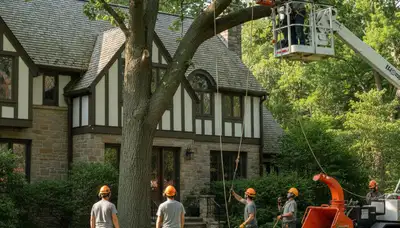
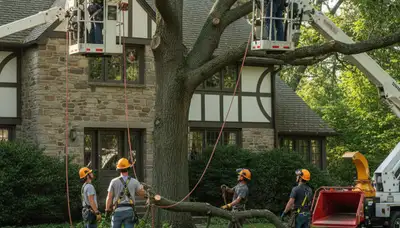
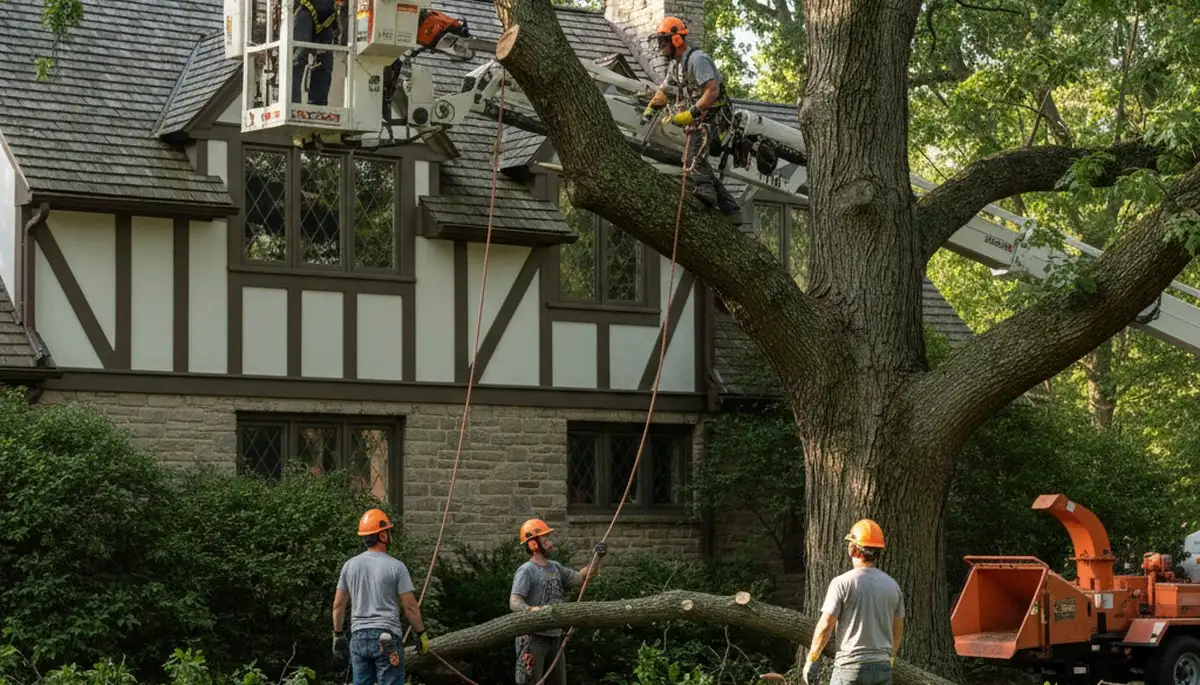
Experienced crews use aerial lifts, rigging systems, and controlled removal methods to keep the site safe and clear debris quickly, even when the ground is wet and access is limited after a storm.
Tight Lot Access and Utility Conflicts
Older Glencoe neighborhoods often have narrow setbacks and overhead utility lines, which makes large equipment harder to use and limb removal more complicated without a plan.
Local pros rely on compact aerial equipment and hand-climbing rigging techniques, with a focus on utility clearance and protecting nearby structures and landscaping.

Kick off your tree service project today!
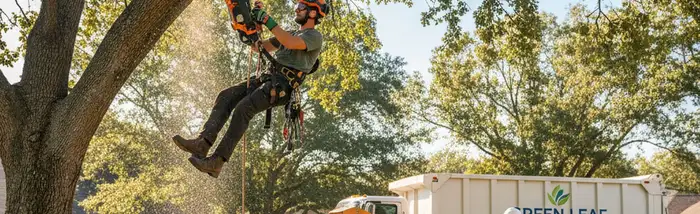
Tree Services in Glencoe, IL: Seasonal Care for Every Property
From routine pruning to storm response, local crews help keep trees healthy, safe, and structurally sound throughout the year:
Routine Tree Trimming and Pruning in Glencoe, IL
- Canopy elevation along Hazel Avenue corridors: Raising mature oak and maple canopies to improve visibility, cut wind resistance, and maintain safe clearance over driveways and walkways on sloped lots.
- Structural pruning for ravine-edge trees: Correcting weight distribution in trees growing along unstable ravine banks near Maple Hill Road, where uneven canopy loads can increase uprooting risk during wet weather.
- Deadwood removal in shaded interior canopies: Clearing dead and crossing branches from silver maples and elms near the Glencoe Beach neighborhood, where dense overhead growth slows natural branch drop and can encourage decay.
- Utility line clearance near the Glencoe Metra corridor: Trimming branches along the Union Pacific North Line right-of-way while maintaining required clearance and preserving tree structure and neighborhood appearance. Nearby communities such as tree pruning professionals in Kenilworth, IL face similar rail-corridor trimming needs along the North Shore.
- Seasonal crown thinning on lakefront estates: Reducing canopy density on Sheridan Road properties to improve airflow, lower disease pressure, and let more sunlight reach understory plantings during the growing season.
Scheduling pruning before the late-season wind arrives can lower structural risk and help protect the mature canopy that defines Glencoe’s neighborhoods.
Tree Removal Services in Glencoe, IL
- Hazardous tree removal near ravine slopes: Removing leaning or structurally weak trees on steep terrain near the North Branch ravine system, where access is limited and hand rigging is often necessary.
- Dead tree removal along residential setbacks: Taking down standing dead elms and ash trees affected by emerald ash borer decline along Tudor Court and Adams Avenue before they become seasonal hazards.
- Storm-damaged tree removal after Lake Michigan wind events: Clearing uprooted or split trees on lakefront and near-lakefront properties after high-wind storms, with same-day or next-day response for urgent cases.
- Removal of structurally declining oaks near foundations: Addressing white oaks and bur oaks with root collar decay or trunk cavities on older properties near the Glencoe Golf Club, where controlled sectional removal is essential.
- Post-construction tree removal for lot redevelopment: Clearing trees from renovation and new-construction sites near the Village Green area while coordinating with contractors to reduce disruption to surrounding landscaping.
Removing hazardous or declining trees in a timely way helps protect buildings, nearby properties, and the long-term health of Glencoe’s urban forest.
Stump Grinding and Cleanup in Glencoe, IL
- Stump grinding on narrow residential lots near Park Avenue: Using compact grinding equipment to remove stumps in tight setback areas where larger machines could damage nearby hardscape or planting beds.
- Root flare grinding along sidewalk corridors: Addressing leftover surface roots after tree removal on older streets, where raised roots create trip hazards and make lawn care harder near the Glencoe Metra station area.
- Multi-stump clearing for landscape renovation projects: Removing several stumps in one visit on larger Greenwood Avenue properties to prepare for replanting, lawn restoration, or hardscape work.
- Deep grinding for replanting preparation: Grinding stumps below grade on properties where new trees will be planted, creating enough soil depth and reducing leftover root mass that could interfere with establishment. Communities to the south such as tree removal contractors in Wilmette, IL also depend on thorough stump clearing before replanting projects.
- Debris hauling and site cleanup after grinding: Hauling away wood chips and backfilling grind sites with topsoil to leave a level, tidy surface across Glencoe residential and estate properties.
Complete stump removal reduces trip hazards, helps prevent regrowth, and reclaims usable space on properties of many sizes and layouts.
Emergency Tree Services in Glencoe, IL
- Fallen tree clearance after storm events: Clearing trees that have fallen across driveways, fences, or roofs after severe wind or ice storms, with priority response available for Sheridan Road and lakefront bluff properties.
- Hazardous limb stabilization after wind damage: Securing or removing partially attached limbs over occupied structures and pedestrian routes on ravine-edge and canopy-heavy lots across the neighborhood.
- Root failure and uprooting response on saturated soils: Managing trees that tip or shift after heavy rain when Glencoe’s clay soil becomes saturated and loses strength on sloped terrain.
- Lightning strike assessment and remediation: Inspecting trees struck during summer thunderstorms for structural damage and removing compromised sections that could endanger buildings, utility lines, or walkways near the Glencoe Beach and Village Green areas.
- Post-storm site clearing for insurance documentation: Providing debris removal and site documentation support for property owners working through storm damage claims, helping capture a clear record of affected trees and structures.
Fast emergency response can limit secondary damage, restore safe access, and help protect nearby properties when severe weather reaches the North Shore.